
Fundraising for Beginners

Welcome to Fundraising.

You came to the right place. Let’s explore the basics.

Fundraisers should use pride, not apology, when asking for a gift for a charity that is doing good work.

Henry Rosso

Who is this site for?

YOU CAN BE A FUNDRAISER.

YOU can be a fundraiser!

This site is for anyone with a passion for a cause. Perhaps you’ve just started out in the fundraising profession, or maybe you have been working in development but need to learn more about digital marketing, or even, perhaps, you have a passion for a cause and just want to learn how to help raise more money, if so, this site is for you.

We’ve created this site to teach you the art and science of fundraising. Articles and training videos are categorized and rated by level of experience, beginner, intermediate, and advanced. No matter your starting point, you will be able to learn how to be an excellent fundraiser. Discover great courses that will help you become the fundraiser you want to be.

Natural born fundraiser is a myth. You can learn the skill of fundraising and raise millions of dollars for your favorite cause. I want to show you how.

What skills will you learn?

THE ART AND SCIENCE OF FUNDRAISING.

Fundraising is similar to other industries: there are specific skills you will learn to become a great fundraiser.

From understanding the motivations to why people give to writing fundraising copy that converts, as someone new to fundraising, you’ll need to understand the psychology of the donor and how to present your fundraising campaign. You’ll also need technical skills for managing a donor database, analyzing results, and creating tests to optimize performance.

You will learn how direct mail differs from digital, how to perform direct mail donor acquisition programs and how we’ve adapted those acquisition programs online.

As you progress, you’ll learn different types of donors such as general, continuity, mid-level, major, legacy, corporation, foundation and more. Different types of donors will behave and give differently and understanding how they think will help you craft the perfect fundraising campaigns.

Find fundraising courses that will teach you how to become a world-class fundraiser.

What should I read first?

LEARN SUCCESSFUL FUNDRAISING.

Boxes of canned food and fresh vegetables on pantry shelves beside volunteer aprons and a clipboard

Should You Ask Your Volunteers for a Year-End Gift?

Many nonprofits leave volunteers out of the year-end appeal or send them the same letter as everyone else. Here’s how to ask people who already give their time.
Hands typing on a laptop showing search results and an ad dashboard, next to a children's book and a volunteer sign-up clipboard

Google Ad Grants Won’t Bring You Many Donors. Use It to Build Your List Instead.

Google Ad Grants rarely produces donations directly. Here’s how to use your $10,000 a month to capture email subscribers who become donors later.
A blank year-end donation reply card, envelopes, pen, and coffee mug on a wooden kitchen table with holiday lights in the background

Your Year-End Reply Card Is Doing More Work Than Your Letter

A donor can skip your year-end letter and still give, but they can’t give by mail without the reply card. Here’s how to make that small card easy to read, fill out, and send back.
Hands holding a phone at a cafe table, showing a youth mentoring nonprofit webpage with an email sign-up box

Only 1.6% of Website Visitors Donate. Here’s How to Keep the Rest.

Most people who visit your nonprofit’s website leave without giving and never return. Here’s how to turn your busiest pages into a steady source of new donors.
An unsigned contract and pen beside a calculator, coffee mug, and donor thank-you cards on a nonprofit office table

Should You Pay Your Fundraiser on Commission?

Paying a fundraiser a percentage of what they raise looks risk-free for a small nonprofit, but it quietly moves the risk onto your donors and pays for the wrong part of the job. Here’s why the model backfires and what to offer instead when money is tight.
A one-page gift acceptance policy on a nonprofit office table beside car keys and a desk phone

Gift Acceptance Policy for Small Nonprofits: A One-Page Version That Works

You don’t need a university-sized gift acceptance policy. You need one page that helps you say yes quickly to the gifts you want and decline the rest without losing the donor.
A printed newsletter lying on a sofa next to reading glasses and a phone

If You Stopped Sending Your Newsletter, Would Anyone Notice?

If your newsletter quietly stopped arriving, how many donors would notice? Here’s how to turn it from organizational news into a donor impact newsletter one person can produce every quarter.
Hands opening a letter beside a mailbox full of envelopes

Your Gift Receipt May Be the Most-Read Letter You Send

The receipt is the one letter your donors are actually waiting for, and most read like a bank statement. The legal part takes three sentences. The rest of the page is yours to use.
Board members writing thank-you cards together around a table

Five Year-End Jobs for Board Members That Don’t Involve Asking for Money

Most board members who resist fundraising are resisting the ask, not the work. Here are five year-end jobs, with a timeline and scripts, and none of them requires asking anyone for money.
Two people at a small nonprofit office table planning, with a calendar on the wall

Should Your Small Nonprofit Even Do GivingTuesday?

GivingTuesday can bring in real money for a small nonprofit. It can also pull gifts forward from December 31 and wear out your staff. Here’s how to decide whether it’s right for your shop.

Why Your Best Prospects Already Know You (And How to Stop Chasing Strangers)
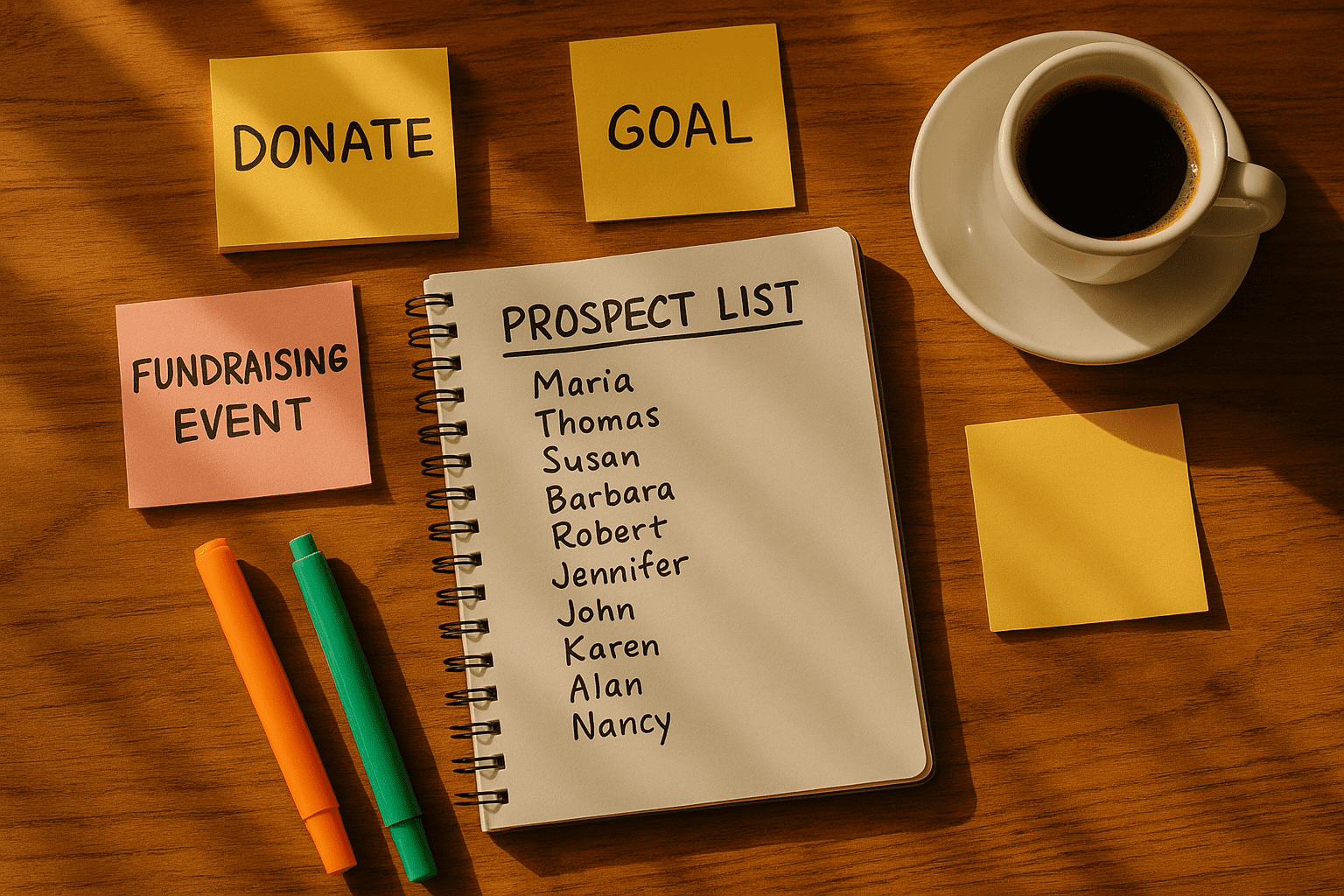
Small nonprofits waste time pursuing cold prospects while warm ones wait to be asked. Your best donors aren’t wealthy strangers waiting to be discovered. They’re people already connected to your mission. Here’s how to stop chasing and start cultivating.

The 50-Name Exercise: How to Build Your First Prospect List in One Hour

You already know your first donors. They’re not wealthy strangers waiting to be discovered. They’re people in your existing network who care about your mission. This one-hour exercise will help you identify 50 real prospects you can actually contact.
123…11 Next